Updated 05 / 04 / 2026
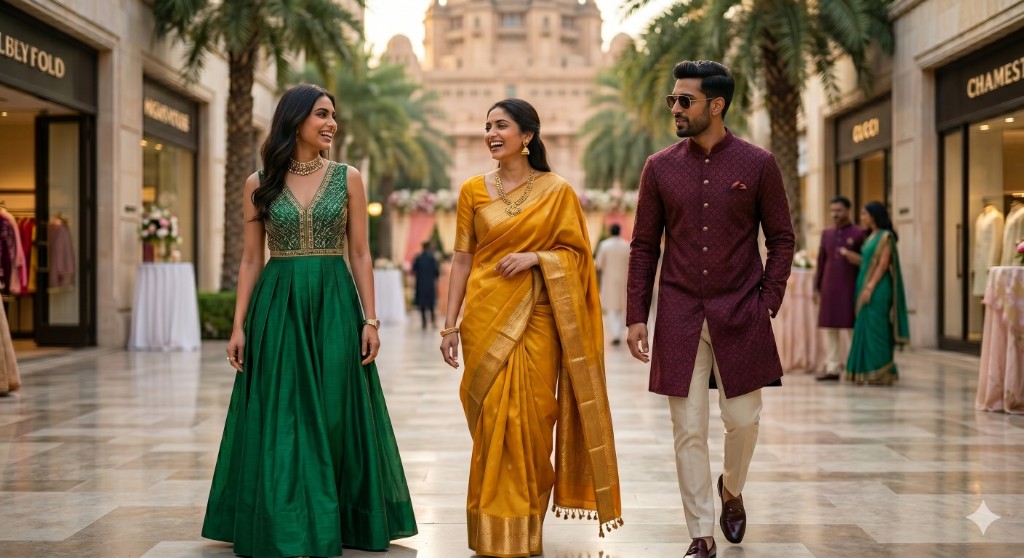
Not sure what to wear to an Indian wedding as a guest? This guide covers the perfect wedding guest outfit for every Indian ceremony & occasional styling advice.

Aeza Editorial
Core team
Indian weddings have their own uniqueness, too. A haldi on Wednesday afternoon is entirely different from a party on Saturday night. You need to understand what the event entails, as well as what wedding guest outfit to expect.
This guide breaks it down by ceremony, so you always show up dressed exactly right.
Indian weddings span multiple days, multiple ceremonies, and multiple dress codes, often within the same family. The mehendi calls for something relaxed and colourful. The baraat wants drama. The reception rewards polish. And somewhere in between, there's a lunch function nobody told you about until the morning of.
The pressure to get indian wedding guest outfits right is real. Overdress and you look like you're competing with the bride. Underdress and aunties will notice. The sweet spot exists, and it's different for every event on the shaadi itinerary — the same kind of occasion-specific styling intelligence that separates a great wedding outfit from a forgettable one. If you'd rather start by understanding your own direction first, our aesthetic guide for Indian women is a useful companion read.
Here's exactly what works best for occasions.
These are daytime ceremonies that happen in the outdoor area. This would include sitting on the floor, using cushions, having turmeric thrown around, and a sense of chaos in order.
This is not the occasion for your silk saree.
Keep jewellery light, chunky oxidised pieces or jhumkas work well. You will be on the floor. Plan accordingly.
Getting turmeric on your clothes during Haldi is intentional, rather than accidental.
It is recommended to wear clothes that you don't care about getting spoiled. One could either go for old kurtas made of cotton or cheap suits in saffron or yellow color.
The formula: comfort + colour + affordable fabric. Nothing else matters at haldi.

Sangeet night is where wedding guest outfit ideas really open up. It's an evening event, usually indoors, with dancing, performances, and everyone trying to look their best — there is real science behind why some outfits make you feel powerful and others don't, and Sangeet is the night to use it.
This is the occasion where you can push into bolder territory.
Stay clear of anything western or bodycon unless the wedding family favors this look. Judge the situation. If the procession involves a horse and the pandit, you should go with an ethnic look. If you are having a 200-guest party at a Bandra rooftop, then Indo-western will do fine — the same Mumbai versus Delhi sensibility that decides every other occasion in your city.
The actual wedding ceremony, whether it's a pheras, a nikah, or an Anand Karaj, is the most traditional event on the schedule. Dress accordingly.
The rule everyone knows, but half the guests ignore: never wear red or white to an Indian wedding ceremony. Red is the bride's colour. White is for mourning. Both are off-limits.
If you're a guest at a South Indian wedding, note that silk sarees are the default; cotton or casual fabrics may read as underdressed.
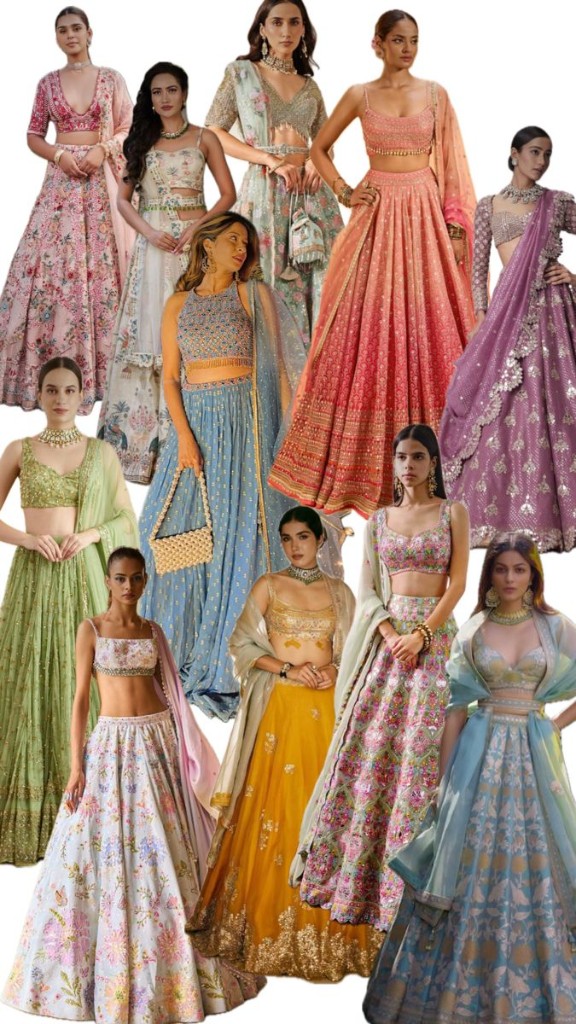
Wedding-guest lehenga and Anarkali silhouettes across pastel and jewel-tone palettes.
Wedding ceremonies last. Your outfit needs to look as good in hour four as it did in hour one. A few rules that consistently work, and they all start with your body type and skin tone:
Receptions tend to be the most formal event on the wedding calendar, and also the most flexible in terms of what's acceptable.
This is where Indo-western outfits, gowns, and heavily embellished pieces feel completely at home — and where 10 outfits that build confidence at any size or shape can be dressed up rather than down.
Reception is also the safest space to wear your statement jewellery, heels that are more style than practical, and your most dramatic blouse.

Not every wedding event is a production. Tilak ceremonies, family lunches, and roka functions are lower-key and usually smaller gatherings.
Avoid overdressing for these. It reads as not understanding the occasion, which is its own kind of faux pas — closer to the decision-fatigue trap of a full wardrobe with nothing to wear than a styling problem.
Regardless of the ceremony, a few rules hold across every Indian wedding:
Figuring out what to wear to a wedding as a guest, across five ceremonies, two dress codes, and a WhatsApp group full of conflicting opinions, takes real effort.
Aeza, India's discovery-led AI fashion marketplace, takes the guesswork out of it. Describe the ceremony and the look you want, and discover ethnic, western and fusion pieces from 30+ Indian brands. Try them on virtually and get your size right in every brand, part of the broader shift from ecommerce to AI commerce. No scrolling for hours, and no more online shopping disappointment.
Find your next wedding guest look on Aeza.
FAQ
You have strong alternatives. A floor-length Anarkali suit in silk or brocade is equally formal and far easier to manage than a draped saree. Lehengas, sharara sets, and embellished kurta sets all work well for ceremonies and receptions. You don't need a saree to dress appropriately for an Indian wedding.
For an Indian wedding with a cocktail dress code, an Indo-western gown, an embellished cape set, or a structured co-ord in a rich fabric is the right call. Western cocktail dresses work too, but adding an Indian element, embroidery, a dupatta, or traditional jewellery, ties the look to the occasion.
On the whole, wearing the same clothes two times during a multiday wedding should be avoided if you are one of the closer guests. However, if you are far away from the bride and groom's family or even attending for only a day, wearing the same dress to other weddings will not matter at all.
Black was once considered inappropriate for Indian weddings, but that has largely changed for urban weddings. A heavily embellished black outfit at a reception or sangeet is now widely accepted. For traditional ceremonies, especially in more conservative families or South Indian settings, it's safer to avoid black or to pair it with gold accessories that soften the formality.
Jewel tones are reliably strong; emerald, sapphire, burgundy, gold, and deep pink work across complexions and ceremonies. Pastels work well for daytime and mehendi events. Avoid red (bride's colour), white (mourning), and very pale colours that may read as underdressed for evening events.
.webp)