Updated 06 / 07 / 2026
Minimalist, boho, streetwear, or classic: find out which aesthetic is actually yours. A practical style guide for Indian women covering ethnic and western wear.

Aeza Editorial
Core team
Everyone has a style. Most people just have not found the words for it yet.
This guide helps you figure out yours, clearly, practically, and without a mood board in sight — it's the natural companion to our deeper read on how to find your personal style in India without copying influencers.
Discovering your own aesthetic style is not about choosing an aesthetic on Pinterest and sticking with it for life. It's about recognizing a pattern in the clothing that best reflects you and then creating more of it, consciously.
The issue is that most style advice starts off by assuming that you have some sort of grasp of your aesthetics already. You learn how to put together a capsule wardrobe or style yourself according to your body shape, both good pieces of information, but only once you've learned your basics. Your basic principle, your aesthetic style, your visual identity.
If you have ever stood in a full wardrobe wondering how to find your personal style, or taken a what is my aesthetic quiz only to get a result that feels vaguely right but not quite, this is the guide that goes deeper.
In order to have a clear understanding of these aesthetics before the quiz questions and Pinterest boards come, there should be some understanding of what makes each of these aesthetics tick. Not the social media Instagram version, but the version that you wear on Tuesday.
Minimalist fashion does not necessarily involve having less stuff. Instead, it entails selecting items that will not conflict with one another — a useful principle whether you're getting dressed in under 5 minutes or building a wardrobe from scratch.
The minimalist closet should be characterized by simplicity of design, use of subdued colors, and shapes that are well-defined yet not excessive. There should be no unnecessary ornamentation.
In an Indian context, minimalist looks like:
You are probably a minimalist if:
The minimalist's superpower is that she always looks intentional. The risk is looking flat if fit and fabric quality are not prioritised, because with minimal styling, those two things carry everything.
Bohemian fashion thrives on an attitude rather than any set guidelines. Bohemian fashion is laid-back, eclectic, and somewhat messy – but in the most positive way.
This includes using loose fabrics, natural colors, custom-made features, and dressing up as if you just got out of bed five minutes ago.
In an Indian context, boho looks like:
You are probably boho if:
Boho translates beautifully to Indian fashion because so much of India's craft tradition, block print, kantha, mirror work, and weaves, aligns naturally with this aesthetic.
Streetwear is much more than big hoodies and sneakers. Its essence lies in the ability to dress oneself with cultural knowledge and visual confidence. Streetwear draws on sportswear, music culture, and the street lifestyle, but only consciously.
In an Indian context, streetwear looks like:
You probably lean streetwear if:
Streetwear in India is still finding its full language, but Indian Gen Z is writing it in real time. This aesthetic has enormous room to evolve with India-specific references.
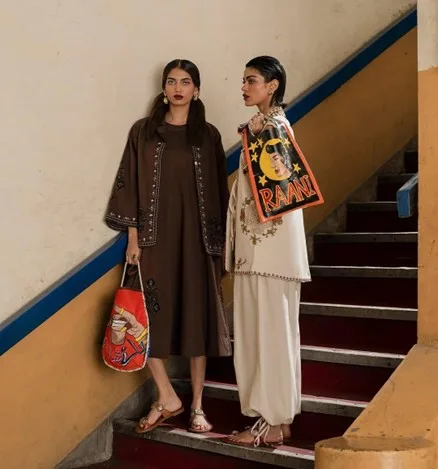
Classic dressing is anything but boring. It is refined. The classic dresser knows exactly what fits and wears it without fail, always looking current because she wasn't chasing the fad to begin with.
Imagine a silhouette, fabric, and color that is elegant without being dull.
In an Indian context, classic looks like:
You are probably classic if:
The classic dresser ages the best of any aesthetic, because her clothes do not expire.
Most people are not one pure aesthetic. They are a primary with a secondary influence.
A minimalist classic is drawn to clean lines and structure but invests in quality staples rather than trend pieces. A boho-streetwear mix layers artisan pieces with urban footwear and a relaxed attitude to dressing. A classic-minimalist keeps everything structured and neutral but takes the classic's love of quality fabric and tailored fit.
How to find your personal style when you feel like a mix:
Start by pulling out the five outfits you have worn most in the last six months. Not your favourites on paper, the ones you actually reached for. Look for the pattern.
Are they structured or relaxed?
Are they colourful or muted?
Are they layered or clean?
Are they ethnic, western, or mixed?
The answers to those four questions will point you to a primary aesthetic more accurately than any mood board. Your real style is already in your wardrobe. You just need to read it.
Finding your aesthetic in India is more complex than in most markets, and that complexity is worth acknowledging.
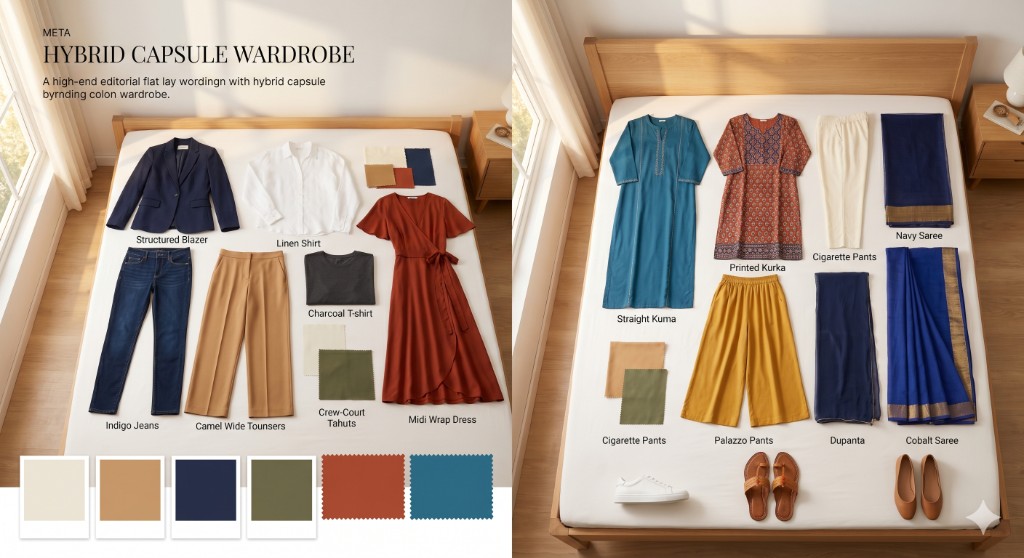
Indian women dress across two full wardrobes simultaneously. You have your ethnic wear identity and your western wear identity. They are not always the same aesthetic. A woman can be a complete minimalist in her Western wardrobe and deeply boho in her ethnic wear. Both are valid. Both are hers.
The second factor here is the occasion. Indian society has more dress codes than probably anywhere else: office wear, casual wear, party wear, wedding wear, puja wear, family wear, date wear, and travel wear. The aesthetic you choose will have to adapt to all of these occasions.
This is why generic Western-style advice does not fully translate. What my aesthetic in an Indian context means is accounting for both wardrobes, both dress code systems, and the full range of Indian skin tones and body types that influence which colours and silhouettes actually work.
Once you know your aesthetic, the wardrobe decisions get significantly easier.
For minimalists: Invest in fit and fabric. Buy less, buy better. Every piece should work with at least three others already in your wardrobe before you purchase it.
For boho: Start with a color palette: earthy shades, jewel shades, or neutral shades. Be sure to make use of handmade and artisanal items rather than high-street fakes.
For streetwear: Style your outfit on the basis of one key piece – a nice sneaker, an eye-catching jacket, or even a cool T-shirt. Proportion is crucial.
For classic: Prioritise tailoring. One well-fitted blazer is worth more than five average ones. Build a core of 8–10 pieces that work in multiple combinations and refresh with one or two new pieces per season.
Your aesthetic is not something you pick. It is something you notice, in the outfits you keep reaching for, the colours that keep appearing, the silhouettes that keep making you feel right — the science behind outfit confidence explains why some pieces just feel like yours.
The four aesthetics above are a framework, not a box. Use them to identify your dominant direction, then build from there with intention — our guide on how to find your personal style in India without copying influencers goes deeper on the process.
If you want personalised outfit suggestions matched to your aesthetic, body type, and skin tone, across Indian ethnic and western wear, Aeza is India's AI Commerce platform for fashion that does exactly that. Free, India-trained, and built for the full complexity of dressing as an Indian woman.
.webp)