Updated 05 / 11 / 2026
.webp)
Online clothes shopping in India keeps disappointing because platforms are built for inventory, not for you. Here is how AI personalisation changes that.

Aeza Editorial
Core team
You open the app. You scroll for forty minutes. You add three things to the cart. You buy one. It arrives and looks nothing like the photo.
Sound familiar?
It is not bad luck. It is a broken system, and it happens to almost every woman shopping for clothes online in India — part of the bigger shift from ecommerce to AI commerce in fashion.
The promise of online clothes shopping was simple: more choice, better prices, delivered to your door. And on paper, it delivered. Indian fashion e-commerce has exploded. You can find everything from handloom sarees to streetwear co-ords without leaving your bedroom.
However, experiencing success by finding something that really works and that suits your physique, complements your skin color, and actually resembles the look that the model had, is still no easy task. The reason why online clothes shopping in India always disappoints is not a failing on my part, but a flaw inherent in the very structure of the system — one that an AI stylist is structurally built to fix.
Most fashion platforms are built around inventory, not around you.
Their job is to show you as many products as possible and hope something sticks. The algorithm is optimised for clicks and purchases, not for whether the thing you buy actually works when it arrives.
Think of it like a department store where every salesperson has been replaced by a search bar. You can find things. But nothing is curated for your specific body, your skin tone, or the occasion you are actually shopping for.
The result:
This is not a niche problem. Return rates for fashion e-commerce in India sit between 25–40% depending on the platform. That number exists because the system is guessing, and so are you.
Every product image on a fashion platform shows the same thing: a model with a specific body type and skin tone wearing the outfit under controlled studio lighting.
That model is rarely Indian. When she is, she is rarely representative of the full range of Indian skin tones and body types. The result is that you are making a purchasing decision based on how something looks on a person whose proportions and colouring are nothing like yours.
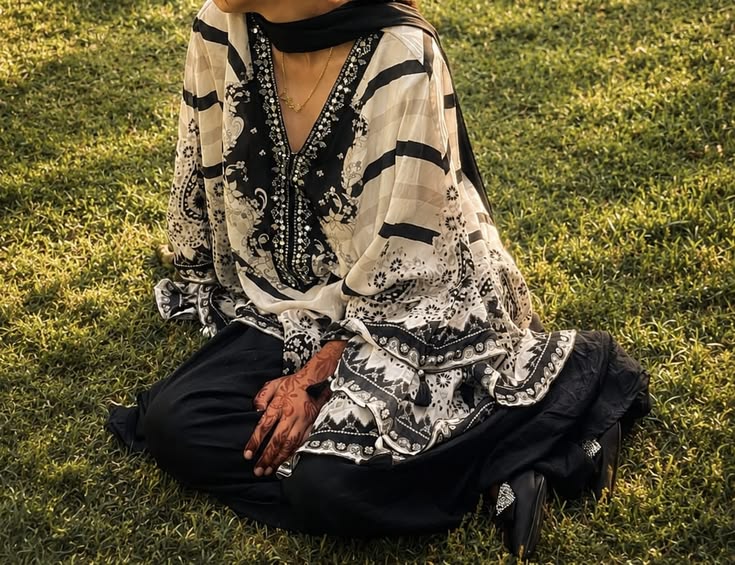
Burnt orange kurtas appear vastly different when worn by a fair-skinned person under studio lighting compared to how they would look on a medium or dark-complexioned Indian individual under normal light conditions. Likewise, a flared skirt that ends mid-calf for a 5'8" woman will end at the knee for a woman who is 5'3".
Indian fashion sizing is not standardised. An M on one platform is an XL on another. A kurta labelled "fits up to bust 38 inches" may or may not include the hip measurement you actually need.
It can be frustrating to compare the sizing chart, go through the reviews, and hope that someone with the same measurements as you has noted it; however, in the end, you will have to guess. It is tiring, and it is one of the reasons for the failure of online clothing retail in India.
Most platforms let you filter by category: ethnic, western, party wear, and casual. But your life does not sort itself into those categories so cleanly.
You are not shopping for "party wear." You are shopping for something to wear to your cousin's engagement in December that works for a North Indian winter, is appropriate for a formal family gathering, photographs well, and does not look identical to what you wore to the last three family events.
No filter on any platform handles that. No algorithm currently accounts for it. So you scroll, guess, and hope.
Descriptions of fabrics on the internet are very ambiguous. "Soft cotton blend." "High-quality fabric." "Lightweight fabric." This does not give any idea about whether the kurta fabric will become translucent when exposed to the sun's rays, whether the rayon fabric will wrinkle immediately upon sitting, or even if the "stretchable" waistband will indeed stretch to your measurements.
Fit notes, "relaxed fit," "slim fit," "regular fit", vary by brand and mean almost nothing without a reference point tied to your specific measurements.

AI does not just make existing shopping faster. It changes the fundamental logic of how fashion discovery works.
Instead of starting with inventory and hoping you find something, the way every current platform works, AI starts with you and finds what fits.
An AI fashion stylist takes your body type, measurements, and proportions into account before showing you anything. It does not show you a kurta that will not work for your frame. It shows you silhouettes that are specifically suited to how your body is built.
This is what a human personal stylist does. The difference is that a human stylist charges ₹3,000–10,000 per session and is available by appointment. An AI stylist is free and available at midnight when you are actually trying to figure out what to wear — we break down the full comparison in our piece on AI stylist vs personal stylist for Indian women.
There is an extremely broad spectrum of skin tones in India, from very light to very dark, including many hues of undertones, which include warm, cool, and neutral. International fashion systems have not been programmed for this diversity. They do not consider the color reaction on Indian skin.
An AI stylist trained specifically on Indian fashion can tell you that the dusty rose kurta you are considering will wash out your skin tone, while the terracotta version of the same silhouette will work significantly better. That single piece of information is worth more than an hour of scrolling.
Virtual try-on technology allows you to preview the look of an outfit on your body rather than on a model before buying it. It solves the primary problem associated with online fashion shopping.
When you can see the outfit on you, the guesswork is gone. The return rate drops. The disappointment rate drops. You buy with confidence instead of hope.
AI can process context that a filter cannot. Tell it you need an outfit for a winter wedding in Delhi, for a woman with a pear-shaped body and medium skin tone, for a budget of ₹3,000–6,000, and it can work with all of that simultaneously.
That is the difference between a search bar and a stylist.
Indian fashion is more complex than almost any other market in the world. You are shopping for ethnic wear and western wear. You are navigating regional styles, fabric considerations for different climates, occasions that range from corporate offices to multi-day weddings, and a colour palette that needs to work across enormously varied skin tones.
Global fashion AI tools are not built for this. They were trained on Western fashion data. They do not know what a kanjeevaram saree is, let alone which drape style works for which occasion, or how to recommend a lehenga for a specific body type.
This is the gap that India-specific fashion AI was built to fill. And it is a significant gap.
The difference between current online fashion shopping and AI-powered styling is the difference between walking into an unassisted store and walking in with a stylist who already knows your size, your taste, your budget, and what you have worn to the last five events.
One of those experiences produces good outcomes. The other produces a cart full of things you are not sure about.
AI commerce in fashion is not about replacing the joy of discovering new clothes. It is about replacing the frustration of discovering the wrong ones. The scroll, the guess, the disappointment, the return, that entire cycle is what AI is designed to eliminate.
When the recommendation is built around you from the start, the whole experience changes.
Online clothes shopping in India has a structural problem, and it is not going away on its own. Platforms optimised for inventory will keep showing you everything. Algorithms optimised for clicks will keep recommending what is popular, not what works for you — the deeper shift from ecommerce to AI commerce explains why.
The fix is personalisation that starts with your body, your skin tone, and your actual occasion, not with a catalogue. If you've also been thinking about whether you need an AI stylist or a human personal stylist, the answer is closer than you think.
Aeza is India's AI Commerce platform for fashion, built specifically for this problem. Personalised outfit recommendations for Indian ethnic and western wear, virtual try-on, and an AI stylist that understands Indian fashion from the ground up. Free to use, available whenever you need it.