Updated 05 / 02 / 2026
Outfit confidence isn't accidental. Explore the psychology of enclothed cognition, colour theory for Indian skin tones, & why fit shapes how you feel most days!

Aeza Editorial
Core team
Some outfits make you walk differently. Others make you want to go back home and change. The difference isn't only about how you look.
There's actual psychology and neuroscience behind outfit confidence, why certain clothes make you feel capable, sharp, and in control, while others leave you second-guessing yourself all day. It goes beyond fit and colour. It's about what your brain associates with what you're wearing, how the clothes interact with your body, and whether the outfit matches the version of yourself you're trying to show up as that day. On the days the mirror feels harder, our honest guide to dressing when you don't like how you look is a useful companion.
This blog has some real reasons why some outfits work, and others don't. Plus, what does that mean for how Indian women can dress with more intention and less overthink, especially when the high-stakes moments arrive, like your first day at a new office?
In 2012, two researchers at Northwestern University ran an experiment. They gave participants a white lab coat to wear and then tested their attention and focus. The people wearing the coat performed significantly better than those who weren't.
The coat did not change their intelligence. It changed how they felt about themselves, and, in turn, how they performed. This effect is called enclothed cognition. The clothes you wear do not cover your body. They send signals to your brain about who you are and how you should behave in that moment.
A blazer does not simply look professional. It makes you feel more authoritative. A well-fitted kurta for a presentation does not simply look polished. It makes you feel credible and composed.
Most people think clothing sends signals outward, to other people. But the more powerful signal goes inward, to yourself. Every time you get dressed, your brain processes what you're wearing and uses it as context. It asks:
If the answer aligns with how you want to feel, you get a confidence boost. If the outfit feels wrong for the occasion, or wrong for your body, your brain registers a quiet but persistent disconnect all day.
That's the science behind why you can be dressed and still feel underdressed. The outfit did not match the mental context your brain needed.
Ask any stylist, Indian or global, and they'll say the same thing: fit is the single biggest factor in how good an outfit feels to wear.
A ₹500 cotton kurta that fits your body perfectly will make you feel better than a ₹5,000 designer piece that pulls at the shoulders or sits awkwardly at the waist.
Here's why: when clothes fit well, they move with you. You stop thinking about them. And the moment you stop thinking about your clothes, you start focusing on the room, the people, the conversation, the task. That shift in attention is what outfit confidence actually feels like.
This is a specific and underacknowledged problem for Indian women.
Most global fashion brands, and even several Indian fast fashion labels, size their clothes based on Western body proportions. That means narrower hips, longer torsos, and different shoulder widths. Indian women, on average, carry proportion differently — part of why online clothes shopping in India keeps disappointing most buyers.
The result: a top that fits your bust does not fit your shoulders. A kurta that works at the waist is too long or too short for your frame. Trousers that fit your hips are baggy at the waist.
None of this is a body problem. It's a sizing problem. But when you try something on, and it does not sit right, the brain doesn't always make that distinction. It just registers: this doesn't work on me. Virtual try-on helps short-circuit that loop before you ever press buy.
Over time, that registers in your mind as "why do I always hate my outfits", when the real issue is that the clothes were not built for your body type in the first place.
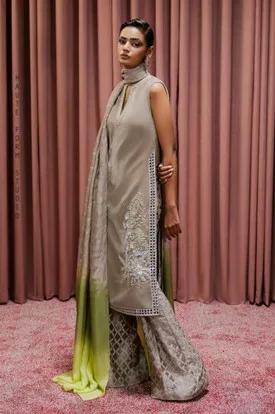
The impact of colour on psychology has been extensively researched. Various colours induce various moods not only in the individual who wears the particular colour but also in other individuals.
Some of the findings that are consistent include:
None of these are rules. But they are patterns your brain recognises, and so does everyone else's.
Here's where standard colour advice fails Indian women almost entirely.
Most colour psychology content, and most "what colours suit you" guides, are calibrated for lighter skin tones. The advice to "wear pastels if you have a warm undertone" does not account for how pastels sit against a deeper Indian complexion. The result is often washed out, not vibrant.
Indian skin tones, from fair to wheatish to medium brown to deep, have distinct undertones and interact with colour very differently. Deep jewel tones, earthy terracottas, rich mustards, warm rusts, these colours don't just look good on deeper Indian skin tones, they look extraordinary.
Generic colour advice misses this completely. Skin tone outfit suggestions built specifically for the range of Indian complexions look very different from what any Western fashion guide recommends.
There's a specific kind of outfit discomfort that has nothing to do with fit or colour. It's the discomfort of wearing something that doesn't match the occasion.
You know the feeling. Overdressed at a casual gathering. Underdressed for something that turned out to be more formal. Wearing western when everyone else went ethnic. Wearing festive clothes when it was actually a low-key lunch.
This misalignment creates a specific psychological friction. You're dressed, but you feel exposed, like your clothes are broadcasting the wrong signal. That friction sits in the background all day, quietly draining your confidence.
Occasion dressing for Indian women is genuinely complex. The range of events, from office to casual weekend to intimate wedding to college reunion, each has its own unspoken dress code. And in India, those codes mix ethnic and Western elements in ways no global fashion guide has ever properly mapped.
Getting this right is less about memorising rules and more about having a trusted reference point, something that understands Indian occasions, Indian dress codes, and can give you a clear, confident recommendation based on your specific context.
Why do I always hate my outfits is one of the most Googled fashion queries, and it almost never has a simple answer.
Sometimes it's a fit, colour, or an occasion. But often, the deeper issue is identity mismatch.
The clothes were picked out by you because they looked good on someone else: the model, the influencer, or your friend who wears stylish clothes. You wore the clothes and felt like you were dressing up in a costume. Not because the clothes were of poor quality. They weren't made for you.
Your body type, your skin tone, your occasions, your personal aesthetic: these are the variables that make an outfit feel like yours rather than borrowed. When even one of them is off, the whole thing feels wrong.
This is the part the fashion industry does not want you to hear: buying more clothes does not solve the "nothing feels right" problem.
Personal style is built through understanding what works for your specific body, in your specific life, for your specific occasions. That understanding comes from pattern recognition, noticing what you reach for, what you feel good in, and what you never want to take off.
The problem is that most people never get the chance to build that pattern recognition systematically. They shop reactively, dress out of habit, and wonder why nothing feels quite right.
The clothes that empower you aren't random. They suit your body type, the event they're for, your complexion, and an essential truth about yourself at that time. It's undisputed – clothes are psychological in nature.
Outfit confidence for Indian women means dressing with all of this in mind: body type, skin tone, occasion, ethnic and western options, and the personal aesthetic that makes clothes feel like yours rather than borrowed. On the days the mirror is harder, our honest guide to dressing when you don't like how you look right now is built for exactly that.
Aeza is India's AI commerce platform for fashion, built to help Indian women dress with that kind of intention, every day. From body-type-aware personalised outfit suggestions to outfit recommendations across Indian ethnic and western wear, Aeza removes the guesswork and gives you the clarity to get dressed with confidence.
.webp)