STYLE IDENTITY & PERSONAL AESTHETIC

    Wardrobe Essentials Every Indian Woman Should Own in 2026

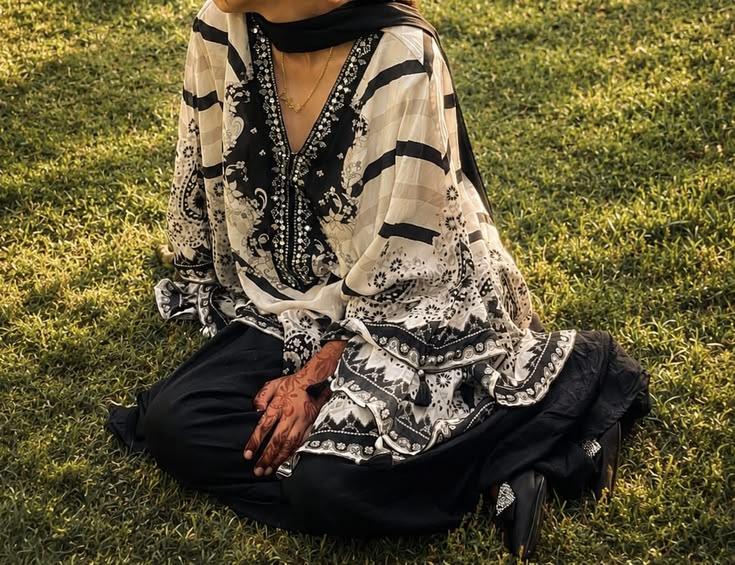
    Indian woman seated on grass at golden hour in a black-and-white printed kurta with a black dupatta and palazzo, mehendi on her hands, a relaxed ethnic essential look

    The wardrobe essentials list for Indian women in 2026: western, ethnic must-haves, footwear, & accessories. Build a closet that goes well with every occasion.

    Aeza Editorial

    Core team

    If your wardrobe consists only of garments you don't even bother wearing, you obviously have a space issue, not a wardrobe. The right wardrobe essentials will solve that. Fewer options. More combinations. All things that get used — the opposite of the full-closet-but-nothing-to-wear trap.

    What's the one ingredient in a functional wardrobe? Intentional basics. Not necessarily the trendiest items, not necessarily the most expensive. Just those that come with you every day of your life.

    Wardrobe essentials for Indian women in 2026 are not the same as a generic Western basics list. You dress for the office on Mondays and festival weekends. You need a kurta that works for a family lunch and a blazer that works for a board meeting. Your wardrobe has to span two style universes, ethnic and western, and do it without doubling in size.

    This is the complete, India-specific list of pieces every Indian woman should own this year. Ethnic, western, and the fusion pieces that bridge both. If you want the system behind the list, start with how to build a capsule wardrobe in India.

    The Western Wardrobe Essentials That Do the Heavy Lifting

    Western basics are the everyday workhorses. These are the pieces you reach for on autopilot, morning commute, coffee catch-up, office meeting, weekend errand.

    Get these right and half your dressing decisions disappear.

    The Bottoms Every Indian Woman Needs

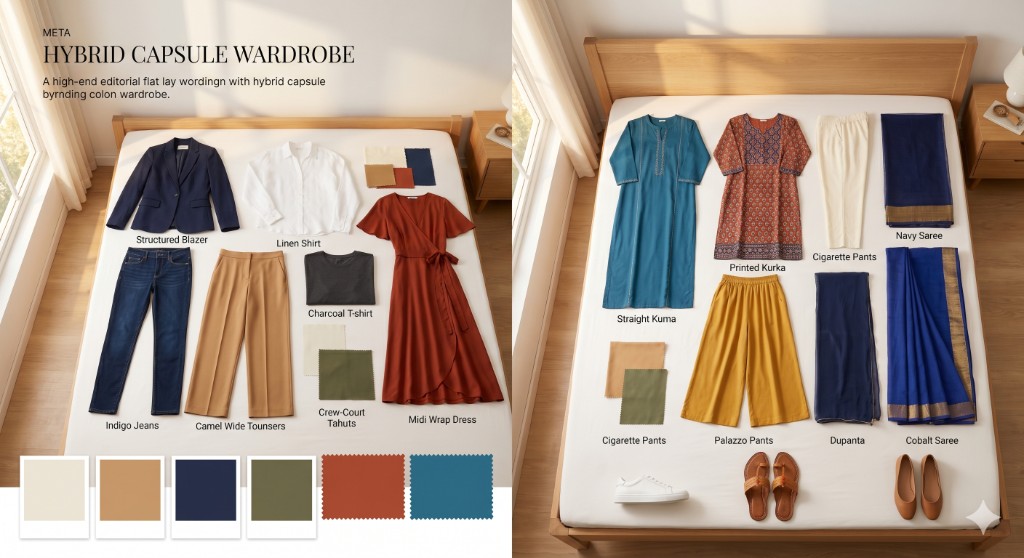
    • Straight-leg jeans in dark indigo or black — versatile bottoms for a western wardrobe. Goes well with kurtas, tees, blazers, and embellished tops. Dark wash ensures it is more on the formal side. One pair you wear forever.
    • Wide-leg trousers in a neutral (camel, navy, olive, or off-white) — the wide-leg pants of 2026 work with everything. More comfortable than jeans and more refined than casual pants, they easily bridge the casual/formal divide.
    • A tailored formal trouser — if you work in an office or attend meetings, one pair of well-fitted formal trousers in black or charcoal is non-negotiable. This is the piece that makes a blazer look intentional rather than casual.
    • A midi skirt in a solid colour — A-line or flowy midi skirts are flattering across body types, comfortable in Indian heat, and dress up or down with a simple top change.

    The Tops That Anchor a Basic Wardrobe

    • Two fitted crew-neck or V-neck tees in neutrals — white and black, or white and navy. The backbone of a basic wardrobe. They go under blazers, over saree petticoats for a fusion look, tucked into skirts, or half-tucked into trousers. Buy good cotton, wash them well, replace them when they fade.
    • One linen or cotton button-down shirt — a clean linen shirt in white or light blue is one of the most underrated pieces in an Indian woman's wardrobe. Office, casual days, or a light layer over a kurta. Sleeves rolled up, instantly relaxed; tucked in with trousers, instantly polished.
    • One embellished or textured evening top — a sequined top, a structured embroidered blouse, or a richly textured fabric top. One piece that elevates a simple bottom into an evening look, replacing the need for a separate evening outfit in most cases.

    The Layers That Complete Every Outfit

    • A structured blazer — if there's only one blazer in your wardrobe and it fits you well, it will be the most versatile item in your closet. It instantly gives jeans an office-appropriate look, adds a modern twist to a kurta, or polishes a dress.
    • A light cardigan or longline overshirt — perfect for the office or a night out, ideal when the weather is cooler and a blazer isn't appropriate. Keep it neutral so it goes with everything.

    The Dress Essentials No Indian Wardrobe Should Be Without

    Dresses are the ultimate single-piece outfit solution, one decision, fully dressed.

    The Two Dresses Worth Owning

    • A midi wrap dress in a jewel tone — the most consistently flattering silhouette across body types. The adjustable waist, A-line skirt, and V-neckline create proportion regardless of frame. In emerald, burgundy, cobalt, or rust, it works for dinner dates, casual Fridays, family lunches, and everything in between.
    • A casual shirt dress for weekends — cotton or linen, knee-length or midi, solid or a clean print. Wear it belted or flowy. This is your dress for when you need to be somewhere in a hurry but nowhere fancy.

    The Indian Ethnic Wardrobe Essentials for 2026

    A basic wardrobe india list that stops at western wear is only doing half the work. Indian women dress across two style contexts, and the ethnic half deserves just as much intentional curation. If you're still defining yours, our aesthetic guide for Indian women helps.

    The Kurtas Worth Investing In

    • Two solid-colour straight-cut kurtas — the ethnic equivalent of a plain tee. Solid colours in your palette (teal, rust, navy, mustard, or olive) pair with everything: straight salwar, palazzos, cigarette pants, and jeans. Buy good fabric — silk, chanderi, or cotton that holds its shape.
    • One printed or embroidered kurta for semi-festive occasions — subtle embroidery at the neckline or a well-chosen block print covers the space between everyday and festive. The piece for family dinners, puja at home, or casual office days with an ethnic dress code.
    • One short or mid-length kurta that works over jeans — the cross-category piece that makes an Indian wardrobe truly hybrid. A well-fitted short kurta over straight jeans with kolhapuris is a complete outfit for almost any semi-casual setting.
    Indian woman styling a fusion ethnic essential look: a pink bandhani-print tie-up top with a white tiered maxi skirt, crossbody bag, and minimal jewellery

    The Ethnic Bottoms That Work Across Occasions

    • Straight salwar or cigarette pants in a neutral — the cleanest ethnic bottom. Works with printed and embroidered kurtas without competing. Beige, off-white, navy, or black; one pair covers most combinations.
    • Wide palazzo pants — more relaxed than a straight salwar, more festive than plain trousers. In georgette or crepe they cross into western territory too; pair with a fitted western top and they read fashion-forward rather than ethnic.
    • A sharara or flared ethnic bottom for festive occasions — one pair. Not daily wear, but indispensable for mehendis, family parties, and office parties where casual and formal both fall short.

    The One Saree or Lehenga That Earns Its Space

    Own one. Make it count.

    A silk or georgette saree in teal, gold, dark pink, or wine suits weddings, receptions, and formal family events. Choose a lehenga the same way — one piece in the right colour rather than several average-looking ones. The goal is not a collection. It is one go-to you reach for without hesitation. For picking the right one by event, see our wedding guest outfit guide by occasion.

    The Footwear Essentials That Complete Both Wardrobes

    Footwear is where most Indian wardrobes have the biggest gap, either overcrowded with occasion-specific pairs or under-equipped for daily variety.

    • White sneakers — the most versatile western casual shoe. Pairs with jeans, dresses, and even short kurtas.
    • Block heel sandals — the evening workhorse. Dressier than flats, more comfortable than stilettos.
    • Kolhapuris or juttis — the ethnic everyday shoe. Works with kurtas, salwars, and fusion looks.
    • One formal office shoe — a pointed flat, a low block heel, or a clean loafer for days when sneakers aren't appropriate.
    • One embellished sandal or heeled jutti — for functions and festive occasions. Elevates ethnic wear without effort.

    The Accessories That Make Basics Look Intentional

    Accessories are not extras; they are the difference between a basic outfit and a complete one.

    The non-negotiable accessory basics:

    • One tote or everyday bag in a neutral colour
    • One evening bag, clutch, or adorned potli
    • Gold or silver stud earrings — the jewellery to reach for in any situation
    • One pair of statement jewellery, such as jhumkas, hoops, or chandbalis
    • One daily wristwear piece — a watch or a bracelet

    Your Complete Indian Wardrobe Essentials List for 2026

    • Western bottoms — straight jeans, wide-leg trousers, formal trousers, midi skirt
    • Western tops — 2 neutral tees, a linen shirt, 1 evening top
    • Layers — structured blazer, cardigan or overshirt
    • Dresses — midi wrap dress, casual shirt dress
    • Kurtas — 2 solid straight-cut, 1 printed/embroidered, 1 short
    • Ethnic bottoms — straight salwar, palazzos, sharara
    • Saree / lehenga — 1 well-chosen piece
    • Footwear — white sneakers, block heels, kolhapuris, formal shoes, embellished sandal
    • Accessories — everyday bag, occasion bag, stud earrings, statement earrings, watch

    Roughly 35 pieces. Covering every occasion an Indian woman actually dresses for in 2026.

    Find Your Missing Essentials on Aeza

    Knowing your wardrobe essentials is step one. Finding the right version of each one, in the right fit, is where Aeza comes in.

    On India's discovery-led AI fashion marketplace, you describe the essential you are missing and discover options from 30+ Indian brands. Try them on virtually and get your size right in every brand before you buy, part of the broader shift from ecommerce to AI commerce in Indian fashion.

    Find your missing essentials on Aeza.

    FAQ

    Frequently Asked Questions

    What are the most important wardrobe essentials for Indian women in 2026?

    The highest-utility pieces are: one structured blazer, two solid kurtas, one pair of straight-leg jeans, one pair of wide-leg trousers, one midi wrap dress, and one versatile saree or lehenga. These pieces alone cover office wear, casual dressing, family occasions, and weddings, the four primary dressing contexts for most Indian women.

    How many clothes should a basic wardrobe have?

    An ideal basic wardrobe for Indian women consists of about 30-35 items, including shoes and accessories. What matters most is that everything must match well with something else, at least three different things. Having 35 carefully chosen items will give you many more combinations than having 80 random items.

    Can wardrobe essentials work for both ethnic and western occasions?

    Yes, for Indian women, they have to. An important wardrobe essentials list takes into account both aspects. The best way is to have clothing that sits between categories: a short kurta worn over jeans, a palazzo worn with western tops, or a linen shirt worn with ethnic wear.

    I shop online a lot, but I never feel like I have anything to wear. What is going wrong?

    The most common issue is buying pieces that do not connect to what you already own. Each new purchase feels exciting in isolation, but does not create new outfit combinations. The fix is to shop from a gap list, identify the specific pieces your existing wardrobe is missing, and buy only those. One piece that completes three combinations is worth more than three pieces that work alone.

    What is the difference between a capsule wardrobe and basic wardrobe essentials?

    A capsule wardrobe consists of items selected carefully and purposely to form a wardrobe of 25-35 pieces with a common colour theme where everything matches. Basic wardrobe essentials are the staples that form the foundation of any capsule wardrobe, the pieces every individual needs irrespective of their style choices.

    Shop like you're in the store.

    Aeza launches this October. Join the waitlist and be among the first in.

    Join Waitlist